Synthetic summary
Sakana AI introduces Fugu, an orchestrator that coordinates multiple AI models like GPT, Claude, and Gemini behind a single API to optimize performance.
Which model should you use to write code, analyse a document or solve a scientific problem? GPT, Claude, Gemini? With Fugu, Sakana AI offers a convenient answer: do not choose.
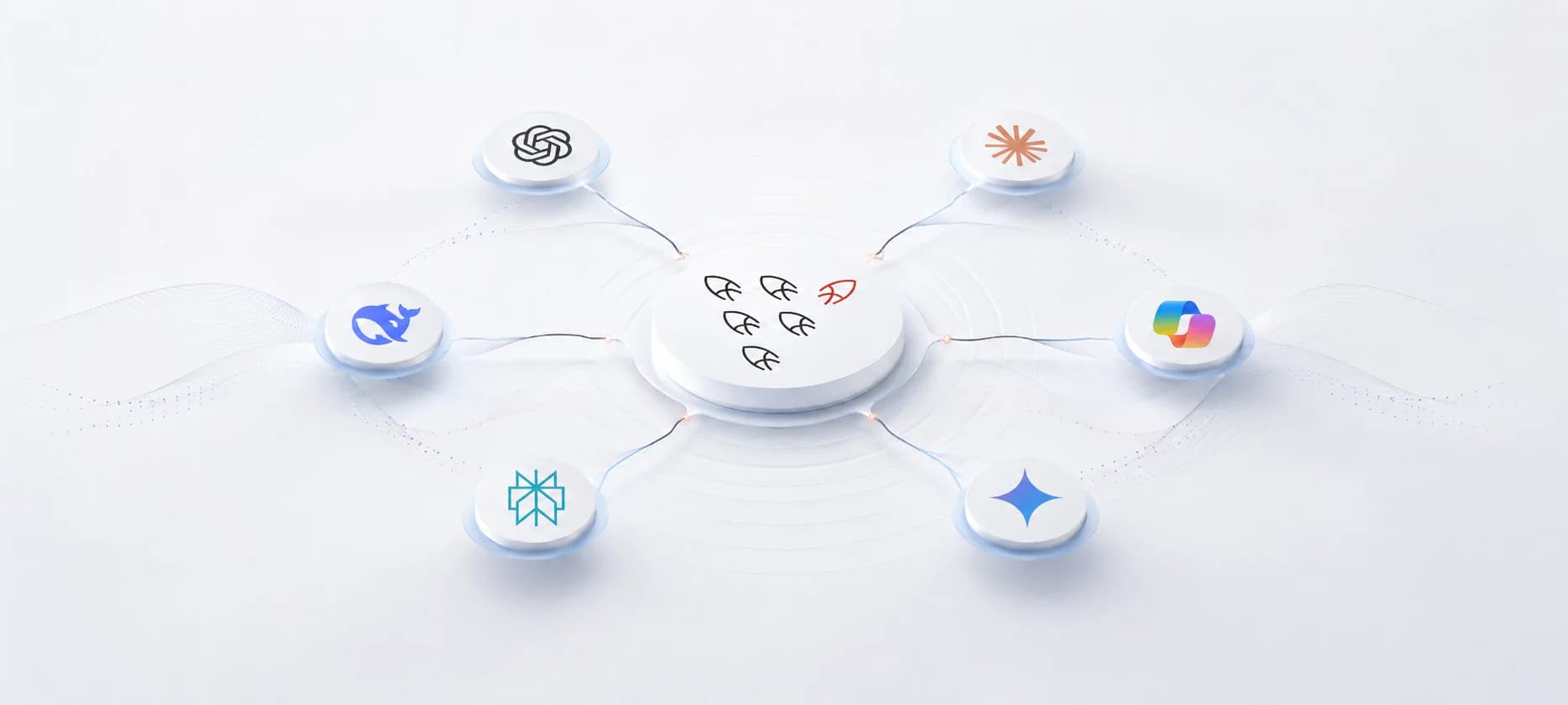
The Japanese AI lab has developed an orchestrator that can coordinate several models behind a single API. Developers send a request as they would to a regular model. Fugu then decides which agents to call, how to divide the work and how to assemble the final answer.
Behind the scenes, it is essentially a small team meeting. Without the Google Calendar invitation.
A team of AI models behind one API
Fugu is not designed to replace GPT, Claude or Gemini. Its job is to decide which one should handle each task.
A simple request may be sent to a single model. For a more difficult problem, Fugu can divide the work between several agents: one creates a plan, another completes the task and a third checks the result.
Sakana currently offers two versions:
- Fugu, designed to balance speed and performance;
- Fugu Ultra, which can involve more agents for difficult requests.
The API also follows OpenAI’s format. Developers can therefore connect it to existing applications without rebuilding their entire infrastructure.
Sakana is training the manager, not just the employees
The system is partly powered by Conductor, a model trained through reinforcement learning to coordinate other AI systems.
Conductor learns how to select agents, write their instructions and decide what information each of them should receive. It can also review their output and launch another attempt when the first result is not good enough.
Sakana is therefore not only training a more capable AI model. It is training an AI that knows how to manage the others.
The best individual model may matter less
For the past few years, AI labs have competed for the top positions on benchmarks. Fugu slightly changes the question: the best system may not be a single model, but a team assembled dynamically for each request.
For developers, this removes much of the work involved in building model routing, agent communication and answer verification. New models can also be added to the system without requiring the entire application to be redesigned.